
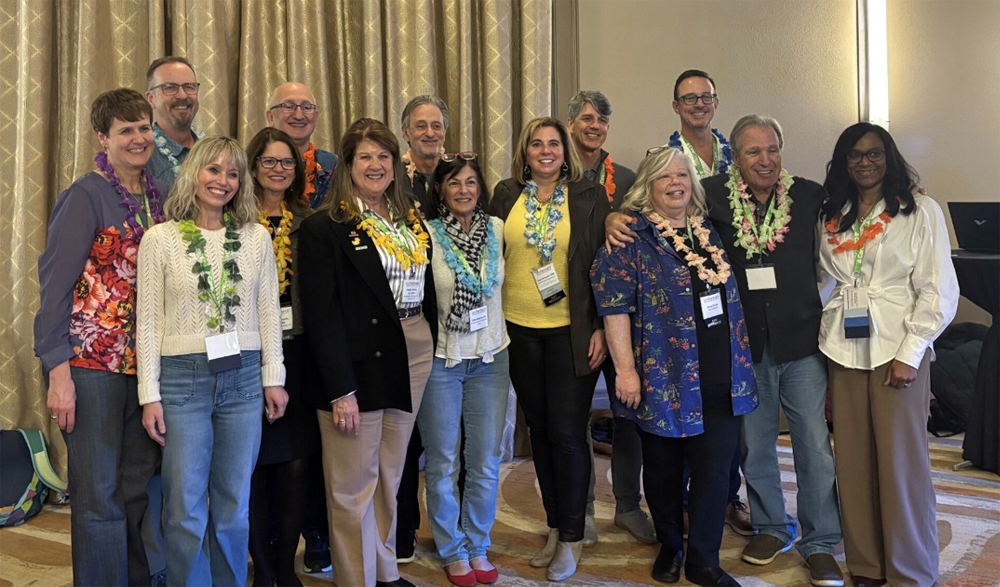
VMX 2026 was a powerful reminder of how quickly our profession is evolving, with innovation and fresh thinking everywhere you turn. The momentum started at the VetPartners meeting and continued throughout VMX 2026, where the focus shifted from what’s new to what’s next: how we lead, how we support our teams, and how we build businesses that are sustainable without losing the heart of the industry.
The VetPartners meeting was a special gathering—the 25th Anniversary Annual Meeting! Past presidents of VetPartners gathered to commemorate this unique organization and the efforts of its members to spur professional growth, networking, and business-driven insights to improve efficiency and profitability. It was an honor and a pleasure to spend time with the past presidents and hear what the record number of new members are bringing to the table. This organization truly challenges its members to think outside the box and look to the future.
Without a moment to catch my breath, the energy at VetPartners shifted to VMX, where attendees could explore innovations, deepen clinical knowledge, and see where business strategies are transforming Veterinary care. I’d like to share some trends I noticed at the meetings.
The Growth of Independent Practices
Discussions at VetPartners clearly illustrated the opportunities and success independent practices can achieve by engaging an expert practice management consultant.
Independents aren’t burdened with layers and layers of decision-making steps, but rather, can quickly make decisions that can help them outmaneuver competitive forces in the market. This is your renaissance!
The Decade of the Cat
You heard that correctly—cats are increasingly prominent as household companions and Veterinary patients. Recognizing this trend is CatsOnly Veterinary Services. CXO and Founder Kristin Wuhrman explains that she co-founded CatsOnly Veterinary Services because “Cat caregivers are more connected to their cats than ever, and we have to design care that meets cats where they truly are—emotionally, behaviorally, and medically. The future of Veterinary medicine depends on serving this growing population with intention, species-specific expertise, and a model that honors the unique bond between cats and their families.”
Kristin Wuhrman, Craig S. Wallace, Scott Maloney, Dr. Jason Epstein, and John Nohe are setting a new global standard for how feline care is delivered and experienced for cats and their caregivers.
Workforce Transformation
From redefining roles to changing workflows to implementing systems that allow team members to practice at the top of their license and keep client connections open, Veterinary practices are considering how mid-level practitioners, new roles, remote access, 24/7 care, AI, and innovative care plans can help them overcome access-to-care issues. Examples include
- Pet Financing Coordinators is a new role I see as potentially credentialed. They are client-facing team members (CSRs, Assistants, or Nurses) who help pet parents understand and navigate payment options for Veterinary care. They ensure clients are informed about available financial solutions so pets can receive timely, appropriate medical care—reducing barriers to care while also supporting the practice’s financial health. This will help address the access cliff by presenting a complete pet financing stack comprising insurance, credit, and membership/wellness plans.
- Extending access to care through telehealth and A—Companies like TeleTails offer a way to extend access to your practice through custom-branded 24/7 telehealth, AI-assisted , and online dog training.
- Tackling the affordability issue—Petfolk’s membership model, PetfolkCare, is designed to make Veterinary care more affordable and predictable by offering exclusive savings on routine and essential care.
Workflow Platforms
Among the many platforms becoming available, those focused on pet insurance and financing options appear poised to help address affordability concerns.
- Clarus is a third-party credit and insurance platform that helps pet parents achieve financial clarity at the point of care by telling them what is covered from an insurance and credit perspective while at the Veterinary practice.
- CareCredit, a Synchrony solution, is evolving its financing options in response to changes in how clients are stacking pet financing tools. Clients are combining pet insurance, clinic wellness plans, and credit providers, making it more challenging for the Veterinary team to keep everything straight when discussing the cost of care with a client and arranging payment. According to Jonathan Wainberg, General Manager at Synchrony (the parent company of CareCredit), “We are making it easier to apply for CareCredit, as well as simplifying the process between CareCredit and pet insurance companies. This change effectively removes friction and takes much of the process out of the CSRs’ hands.” Insurance claims can be linked to CareCredit, enabling the claim’s reimbursement to directly pay down the CareCredit balance from the visit, helping the pet parent avoid costly fees associated with missed or late payments. According to Wainberg, “Many pet parents underestimate the cost of care, as evident in Synchrony’s Pet Lifetime of Care 2025 study, and, if there is one piece of strategic advice about adopting financing tools in 2026, it would be for Veterinary teams to start having a conversation early in the pet’s life cycle about the cost of their care so that pet owners can prepare to care for their pets from routine check-ups to emergencies.”
- PetCentric Health discussed its innovative subscription-based care plans, petFSA™. According to Heather Schmid Moore, Founder and CEO, petFSA™ is a flexible, custom-built wellness plan that lets pet parents budget for preventive care and routine services. The flexible spending allowance helps cover primary care costs beyond routine exams. PetCentric’s model proactively drives compliance and loyalty by bundling care and financial predictability in a way tailored to each clinic’s patient base.
Platforms such as these, along with wellness or membership platforms, will be paramount for helping clients (and something the Pet Financing Coordinator will need to be well-versed in). Veterinary practices should consider enrolling in platforms to support their clients and secure the practice’s financial health.
On the Floor at VMX
There were so many “notables” that there isn’t enough space to mention them all, so here are just a few transforming the industry.
- Senior Dog Veterinary Society (SDVS) was at the ELANCO booth, eating hot wings and participating in panels to discuss proactive care for aging patients. I am excited to announce that SDVS has grown during its time working with the BLT Team and has scaled up.
- Vista iQ—Subcutaneous and dermal mass screening device
- SiOxVet—A silica-based fiber matrix for wounds, ulcers, hemorrhages, and skin care that mimics collagen
- Poopeez—A flushable poop bag that dissolves in water and won’t clog your toilet or landfills, and it is certified compostable, biodegradable, and non-toxic for fish
- And many more!
Spending time at VetPartners and VMX reinforced something I believe deeply—real progress happens when innovation, partnership, and purpose show up together.