
I am not the typical attendee at the Global Pet Expo.
While my usual conference circuit includes CE credits, clinical sessions, and an expo hall of new therapeutics or Veterinary hospital chains, I also get a behind-the-scenes view of the business side of pet care, which is how I found myself walking the floor of the Global Pet Expo in Orlando last month.
It’s not where you’d expect to find a veterinarian, and I largely received enthusiasm when vendors learned of my background. Yet stepping into that world made me think greatly about our own.
For those unfamiliar, the Global Pet Expo is a flagship trade show co-hosted by the American Pet Products Association (APPA) and the Pet Industry Distributors Association (PIDA). This year, held March 25–27, it drew over 1,000 exhibiting pet brands, more than 3,300 booths, and upwards of 20,000 attendees. The entire event is oriented around one question: what’s next in pet care? The answers come in the form of new ingredients, new manufacturers, new products, and new partnerships – all under one very large roof.
Attendees are there to prepare for the year ahead: stocking shelves, securing distribution deals, scouting venture capital, or simply finding the next big thing before a competitor does. Pet industry data and trend insights are woven throughout. And while attendees aren’t required to earn continuing education, there are education sessions where genuine learning can be gained in business, marketing, and innovation for anyone with the curiosity to seek it.
“At a Veterinary conference, they ask great questions: how will this help the pet, what if the pet parent is unhappy? At a pet trade show, they want to know how it looks on a shelf.”
— A sales representative who works both VMX and Global Pet Expo
That comment stopped me. I had spoken with a sales representative who works booths at both VMX and the Global Pet Expo – two shows that, remarkably, share the same convention center just a couple of months apart. When I asked her what the difference felt like on the floor, she answered without hesitation: Veterinary conferences are more rewarding for her because attendees ask meaningful questions. They want to know how a product will actually help the animal. They think about the pet parent’s experience after the sale. At a pet trade show, the first question is about shelf presence.
It’s simply describing a difference in orientation. Both audiences are thinking about pets and pet parents, but Veterinary professionals have a deeper understanding of pet health and might feel more responsible when it comes to recommending a product. But it struck me as exactly the kind of gap that deserves more attention.
What’s Trending: Through a Nutritionist’s Eyes
I only had a day to walk the floor, but the Innovation Showcase in the dog section told a clear story: treats are still popular, but what’s trending is treating with purpose. The formats alone were dizzying: air-dried, freeze-dried raw, squeeze pouches, puffs, tonics, even something called Pawp Water. The themes running through nearly all of them were either engagement (puzzle feeders, lick mats, interactive treat molds) or function, products making implicit or explicit claims around health such as skin and coat, joint support, or immune health – even longevity.
As dogs increasingly go everywhere their owners go, the market is responding with products designed for that lifestyle: portable, interactive, and emotionally resonant. There’s also a continued push to make dog food look and sound more “human” – fresher and more premium.
This is where a clinical lens is useful, and perhaps where the Veterinary profession’s voice is most needed. Because with that level of innovation comes an equal level of variability in how terms get used. Words like “natural” and “fresh” appeared on dozens of products, but they meant something different to almost everyone. Even terms with legal definitions, like “natural,” carry enough interpretive flexibility that you cannot assume consistency. My advice, whether you’re a clinician fielding client questions or a distributor evaluating a new line: ask the company what they mean. Don’t assume.
The People Who Stay
One of the more memorable conversations I had wasn’t about a product at all. I met a gentleman who had left a career in tech to enter the pet industry. I asked him why, and he smiled and said simply, “I have a dog.”
There is something about pets that overrides conventional career logic. They pull people, smart people with options, into an industry they might never have considered, and then, often, keep them there. I told him what I’ve observed over the years: once you’re in this business, you rarely leave. The combination of purpose, joy, and genuine love for animals creates a gravitational pull that most other industries can’t compete with. That’s true whether you’re a veterinarian, a product developer, or a former software engineer who just really loves their dog.
And that shared feeling, I think, is one of the most underutilized bridges between the Veterinary world and the pet products world.
Two Industries, One Mission . . . Mostly Disconnected
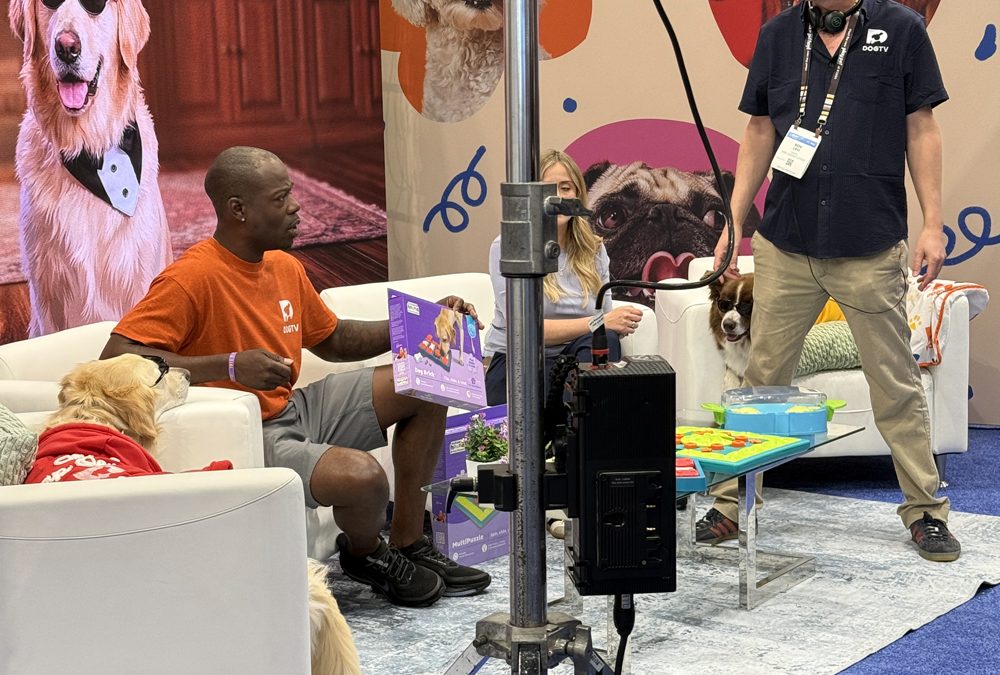
I did see a few familiar faces from the Veterinary world at the Global Pet Expo. Several Veterinary technician social media influencers were walking the floor and appearing on the Dog TV stage. It wasn’t quite what I’d envision as deep professional integration, but it may be where realistic connection can start.
Because here is the honest reality: these two industries are profoundly impacted by one another, and yet they often operate in parallel rather than in partnership. The disconnect isn’t driven by bad intent, but driven by a lack of mutual understanding, which can quietly become hesitancy, and sometimes even contempt.
Veterinary professionals sometimes look at pet product marketing with skepticism, and not always without reason. Pet product companies sometimes view the Veterinary profession as an obstacle or a gatekeeper rather than an ally. Neither posture serves the animal — or the pet parent — particularly well.
What strikes me, standing in the middle of that convention center with over 20,000 attendees who have dedicated their professional lives to pets, is how much common ground there actually is. We are all here because we want animals to be healthier and happier, and because we want to support the people who love them. That shared purpose is more than enough to build on.
Diverse perspectives and skill sets coming together are vital, but the question is whether we’re willing to step into each other’s conference centers (literally and figuratively) and start asking better questions. Not just what pet parents want to buy. And not just whether it has a peer-reviewed study behind it. But both.
That, I think, is where the most interesting work in pet health is waiting to happen.
(All observations reflect the author’s personal attendance at Global Pet Expo, March 25, 2025, Orange County Convention Center, Orlando, FL.)