
Source: Science
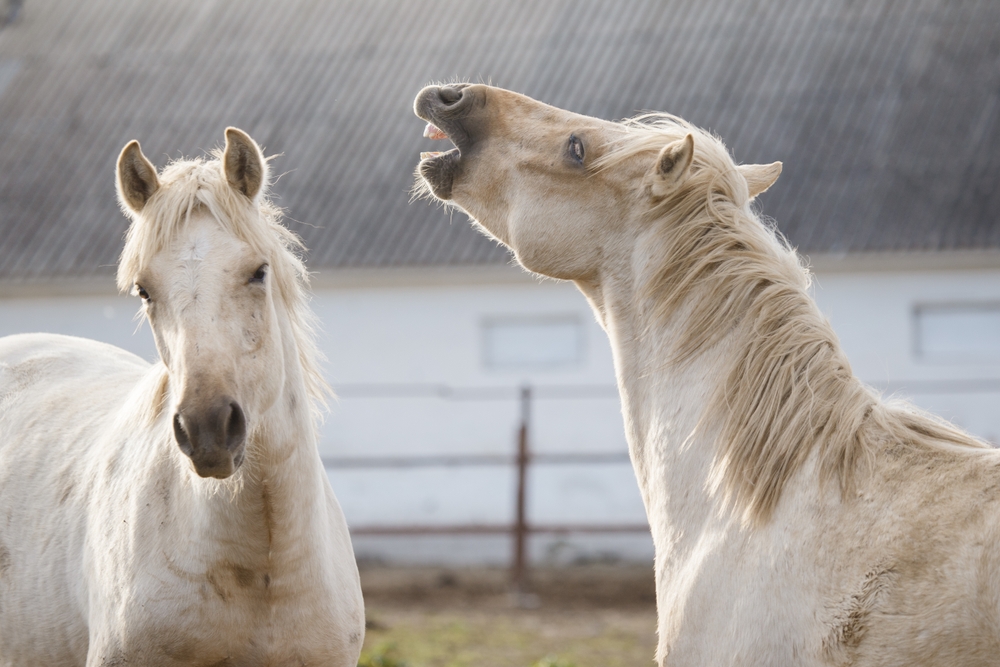
New research reveals that a horse’s whinny is produced through two distinct sound mechanisms occurring simultaneously. Published in Current Biology, the study shows that the whinny combines a low, guttural tone created by vibrating vocal folds (similar to human speech) with a high-pitched whistle generated by air rushing through a constricted part of the larynx. This marks the first experimental evidence that a mammal can produce both a whistle and vocal-fold vibration at the same time.
Using endoscopes on stallions and airflow experiments with dissected larynxes, researchers confirmed that the high note changes pitch with helium, proving it is a whistle, while the low tone remains constant, confirming vocal-fold vibration. CT scans suggest a small air pocket in the larynx may help create the whistle. Scientists believe this biphonic ability may enhance long-distance communication and expand horses’ vocal range, raising new evolutionary questions about whether other mammals use similar techniques.
Read the full story HERE: https://www.science.org/content/article/whoa-when-horses-whinny-they-whistle-and-sing-same-time