
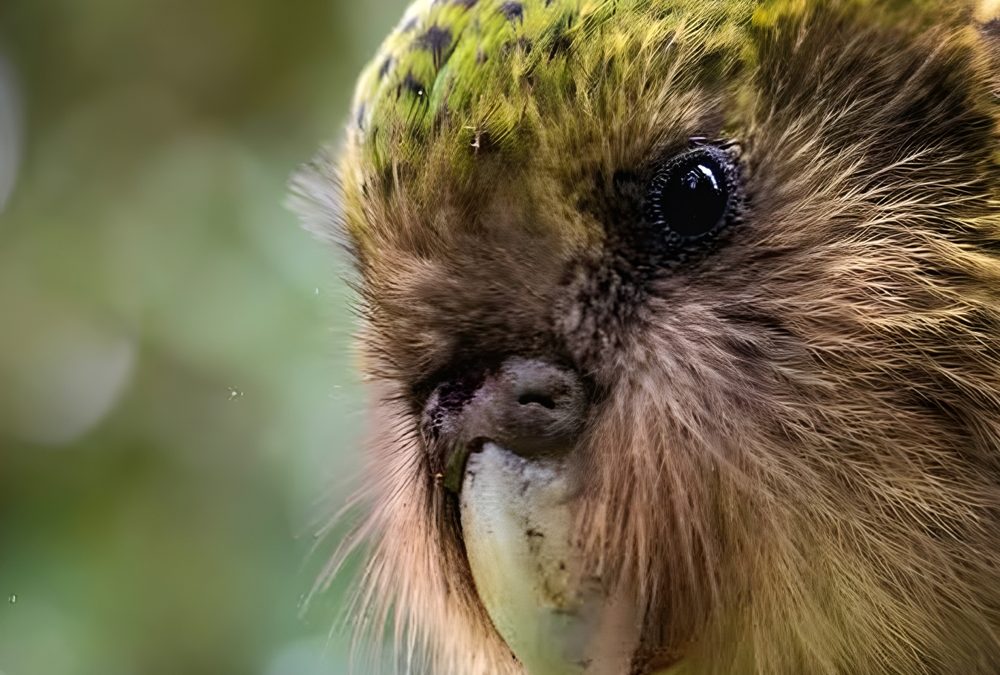
Source: AP News
A bumper crop of rimu berries has sparked rare breeding activity among New Zealand’s critically endangered kākāpō, the world’s only flightless parrot. Once thought doomed due to predation and habitat loss, the population has grown from about 50 birds to more than 200 over three decades thanks to intensive conservation efforts. Kākāpō breed only every two to four years, typically triggered by abundant rimu fruit, which provides enough food for chicks to survive.
Males attract females by producing deep booming calls from ground “bowls,” after which females lay up to four eggs and raise chicks alone. This season, conservationists hope for a record number of hatchlings, with one chick already born on Whenua Hou island via closely monitored nesting and egg incubation. The birds live on predator-free offshore islands and are carefully managed to preserve genetic diversity. Conservationists say saving the kākāpō reflects New Zealand’s deep cultural commitment to protecting its unique native wildlife.