
I’ve spent years talking about the Animal Health industry and sharing the stories of Veterinary professionals on Vet Life Reimagined. We’ve discussed the joy and the challenges: communication, compassion fatigue, work-life harmony, career pathing, and the deep sense of purpose and relationships that keep us showing up anyway. But recently, I’ve been thinking even more about the people who are not in the exam room, the surgery suite, the ICU, or taking the late-night phone call.
I’ve been thinking about the people waiting at home. The people who are married to veterinarians. The children who quietly understand why holidays get interrupted. The partners who hear, “I’m sorry, I have to go back in,” and do not ask for more than what can be given in that moment.
We discuss resilience, boundaries, and the need for support systems inside the profession. But there is another circle of support that often gets overlooked: the people at home who help carry the load, absorb the stress, and hold the center steady when everything at work feels unsteady.
The co-worker you greet in the morning may have just left a child, aging parents, or a sibling who needed help. That reality hit me during a recent conversation on my podcast, Vet Life Reimagined, with Patti Eddington. Patti is the wife of a veterinarian, and she and her husband have been married for almost 45 years. She is also a journalist and a gifted storyteller, and she wrote a book called Don’t Look in the Freezer, a beautifully honest and human account of life alongside a veterinarian. It’s a reminder that the Veterinary profession is never lived in isolation. It is lived in homes, kitchens, minivans, hospital parking lots, and the corners of ordinary days.
That matters.
Because when someone chooses a career in Veterinary medicine, the people they love often choose it too, at least in part. Not the title, not the degree, but they are impacted by the student debt, irregular hours, last-minute cases, emotional spillover, the phone that vibrates during supper, and the reality that “I’ll be home soon” can mean almost anything. They choose to build a life around a calling that, at times, asks a great deal from everyone attached to it.
And yet, those family members are not side characters. They are often the reason we can keep going.
I think about the spouse who has learned not to be offended by the drifting attention that comes when work is weighing on us. I think about the partner who takes over bedtime because work calls us away again. I think about the child who understands that a parent’s work means helping animals and families through some of their hardest days. I think about the person who knows it’s best not to say much, but simply to hand over a fresh cup of coffee or a plate of food.
That support is not passive. It is active labor, emotional labor, and often invisible labor. It is the kind of care that rarely gets noticed publicly because it happens behind the scenes, where real life usually does.
In Veterinary medicine, we are becoming more skilled at naming the burden we carry. We are less skilled at naming the burden carried by the people who love us.
That blind spot matters because support systems need support, too.
This is one reason the conversation around Veterinary wellness needs to expand. Supporting the professional means supporting the household surrounding them, and every human they interact with along the way. That may look like a better work culture, more predictable schedules when possible, mental health resources, leave policies that actually function, and a profession that stops treating exhaustion like a badge of honor. It may also mean acknowledging partners and families in the conversation, not as an afterthought, but as part of the real ecosystem that keeps Veterinary medicine functioning.
And this is not only a story about sacrifice. It is also a story about joy.
One of the things I loved most about hearing Patti’s story was the reminder that a life built around Veterinary medicine can be full, funny, and deeply meaningful. That does not mean it is easy. It means it has texture. It means there is laughter in the midst of interruption. It means there are inside jokes about emergency calls, weird hours, and the peculiar rhythm of a Veterinary household. It means that love can coexist with inconvenience, and purpose can coexist with chaos.
So often, the public sees only the professional identity. They see the veterinarian in the white coat, the technician at the treatment table, the receptionist on the phone, the specialist in the referral center. They do not see the wife, husband, mother, father, daughter, son, or friend who leaves work and steps into another full life. But those identities do not disappear when the workday ends. They travel with us.
And that same truth applies to the people who walk into our clinics with their pets.
The client who seems impatient may have come from a job they cannot easily leave. The person who looks distracted may be juggling childcare, elder care, finances, grief, or all of the above. The family bringing in a beloved pet is not just a “case” or a “appointment slot.” They are people living layered lives too, carrying their own stress, expectations, fears, and responsibilities. When we remember that, our communication becomes more compassionate, and our interactions become more human.
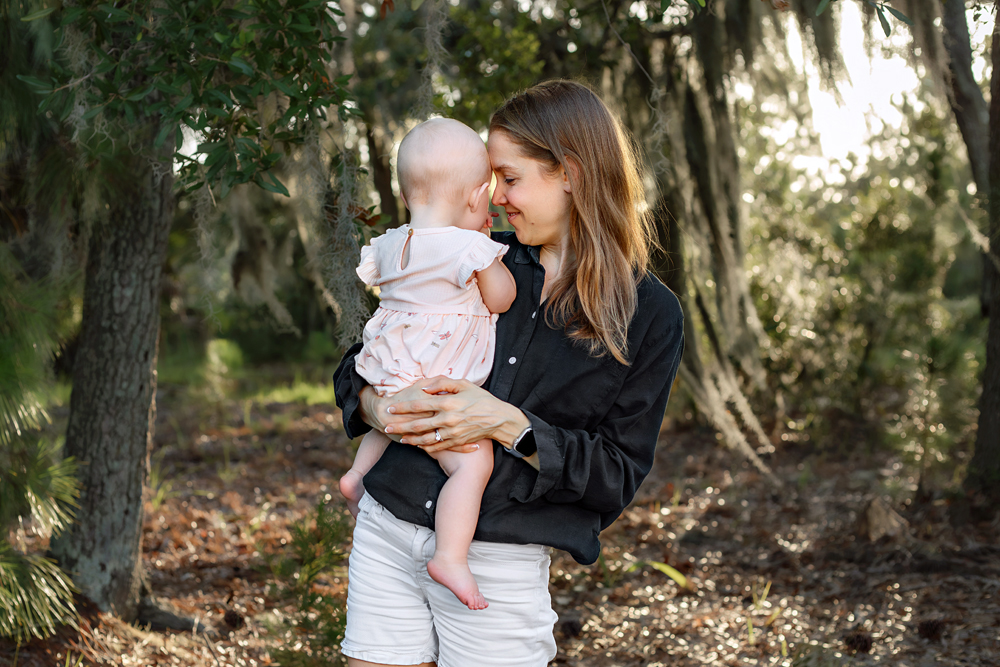
As a veterinarian, a nutritionist, a podcaster, a wife, and a mom, I find that truth increasingly important. Our roles are not separate boxes. They are layered, and sometimes they are in tension with one another. One part of me is always thinking about Veterinary medicine, another part is thinking about my baby girl, another part is thinking about the next interview, the next article, the next message I need to return. Most people live this kind of layered life every day. So do the people who love them, and so do the clients who trust us with their animals.
If we want Veterinary professionals to stay in the profession, we need to stop pretending the profession ends at the clinic door. We need to understand and value the whole life around it.
And we need to honor the people who hold up that life. There is dignity in that kind of love. There is strength in that kind of steadiness. And there is something profoundly human about the way people make extraordinary careers possible.
We do not talk about them enough.
Maybe we should.
Because behind every veterinarian who walks back through work’s doors tomorrow is often someone who helped make that return possible.
To you—and to my own support system here at home—thank you!