
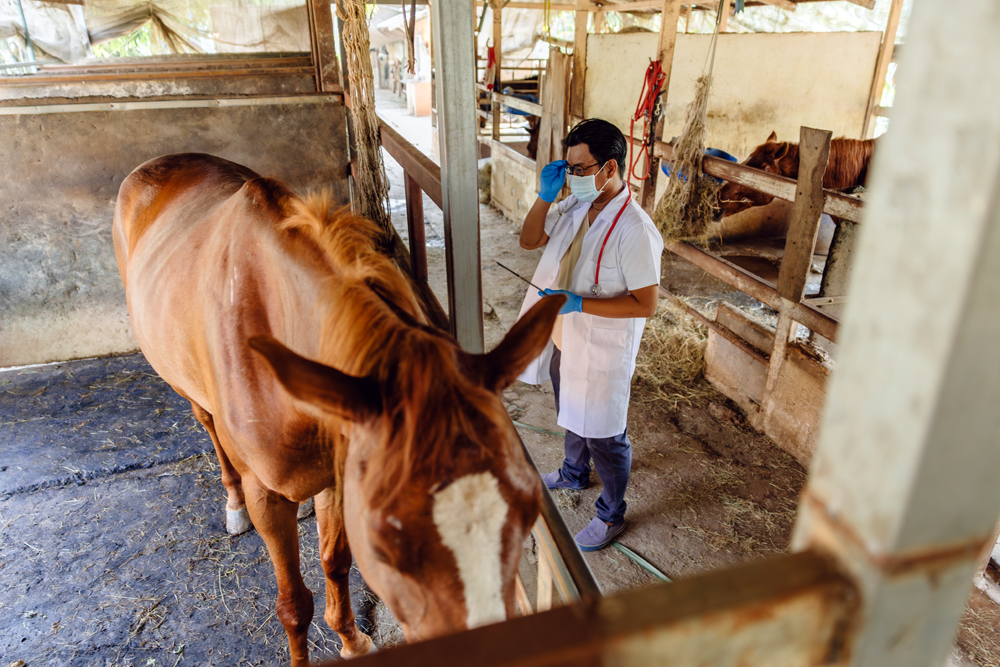
A while ago I asked my veterinarian to come out and look at my horse, because he had not felt quite right under saddle for a couple of weeks and I wanted to know why. After watching him jog and flexing both front legs, she found something in the front feet that she wanted to understand better, and she suggested we take radiographs so we could see what was happening inside the hoof and so the farrier could work from the actual angles rather than from what he could see on the outside. That made sense to me, so we took the films, the farrier changed how he was shoeing the horse, and the horse went better for it.
The complicated part came afterward, and it had nothing to do with the medicine. The bill for the visit and the films was larger than I had expected, and it made me more careful about money than I had been when I agreed to them. My trainer, who rides the horse most days and had not noticed anything on the ground or felt anything in the saddle, asked me what I had already started wondering myself, which was whether all of that had really been necessary. It was a fair question from someone who knows the horse as well as anyone does, and it was also a question my veterinarian could only have answered with the films in hand, because what she had found was not something you could see from the ground. So there I was, with a veterinarian who had done exactly what I asked and found exactly what she was looking for, a trainer who had every reason to wonder about it, and a bill that had quietly made me the least certain person in the barn.
I have spent most of my career in animal health, a good part of it in equine pharmaceuticals, which meant a lot of time riding along with veterinarians and standing in barn aisles while they worked, and I have spent most of my adult life as a horse owner on the other end of that truck. Even so, it took a doctorate in negotiation before I recognized what had happened in my own barn. The three of us had negotiated. Nobody called it that and nobody prepared for it, but there were three people with different information and different things at stake who had to land on one decision about one horse, and that is a negotiation whether or not anyone gives it the name. Equine veterinarians run some version of that conversation several times a day, and very few of them have been handed the tools that people in business use for exactly this kind of situation.
That is what this article is for. Veterinarians are already good at these conversations, better than most people in business would be in their position, because they have no choice but to be. What they have rarely been given is the vocabulary and the handful of techniques that make the conversation easier to set up and easier to hold, and those are what I want to offer here.
Who is Actually in the Conversation
A companion animal veterinarian usually has one person on the other side of the exam table. An equine veterinarian rarely does. In 2020 two researchers at the Royal Veterinary College ran focus groups with 25 racing veterinarians across four practices in England, and what they found was that on a racing yard it is usually the trainer, not the veterinarian, who decides which horses get examined and when, and that the trainer’s requests are shaped in turn by what the owner expects, what the owner is paying, and sometimes by the need to explain a disappointing run. The way they put it was that the veterinarian on a racing yard does not have a single client so much as a group of people, owners, trainers and jockeys among them, who all have a stake in the horse and all have a hand in what the veterinarian ends up doing.
The sport horse world has the same shape, with the owner closer to the action. In 2023 a group of researchers in Vienna surveyed 172 equine veterinarians in Germany, Austria and Switzerland, and 59% of those veterinarians agreed that owners of competition horses come to them with treatment ideas already formed, 56% said those owners expect more of them than leisure horse owners do, and 57% said their own reputation carries more weight when the horse competes. The people who ran that survey summed up the problem in a way I would borrow: the horse, the owner, the rider or trainer and the veterinarian can all want different things, and that is what makes treatment decisions difficult.
None of those wants is unreasonable, which is what makes the whole thing hard. The owner wants the horse sound, wants to feel they did right by him, and is paying for all of it. The trainer wants a program that works and a client who stays. The veterinarian wants to practice good medicine, protect the horse, keep the client, and get to the next farm before dark. A negotiation is simply what happens when people with different reasonable interests need to arrive at one decision, and nobody has to be wrong for it to be one.
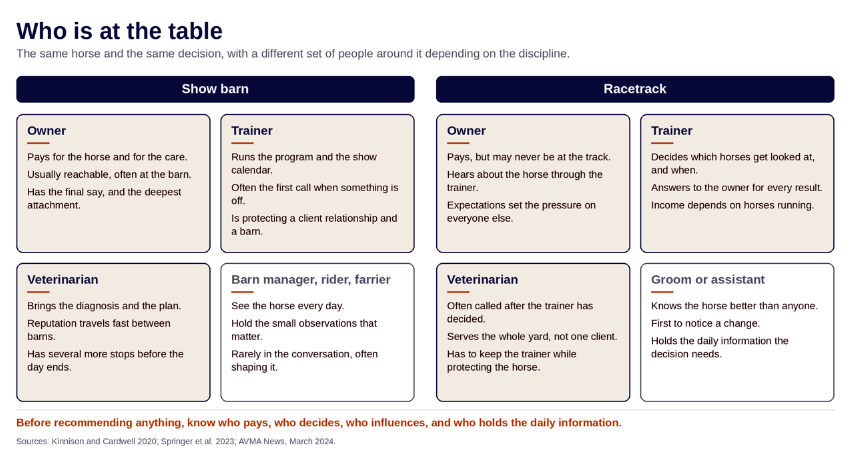
Figure 1. The same decision looks different depending on who is standing in the aisle.
What the Veterinarian is Carrying
Any honest account of these conversations has to start with the veterinarian’s own position, which is harder than it looks from the other end of the lead rope.
The AAEP’s 2022 salary and lifestyle survey, which AVMA reported on in 2024, found equine practitioners averaging 57 hours a week in their busiest quarter, with 104 on-call weeknights and 22 on-call weekends over the course of a year, and it found that roughly half of those who enter equine practice leave within five years, most of them for companion animal jobs. The veterinarian who takes radiographs at four in the afternoon has already made decisions at three other farms that day and will probably make more before it ends.
The financial pressure runs in both directions. In the 2025 American Horse Publications survey of 3,881 horse owners and industry participants, the cost of keeping a horse was the top concern for the first time in the survey’s history, named by 50.3% of respondents, and 54.6% put Veterinary services among the costs that had risen the most. So the owner who flinches at the bill is not imagining things, and the veterinarian who hands it over is often carrying educational debt that would alarm anyone outside the profession. Two people under financial strain, talking about money over an animal they both care about, is the ordinary condition of equine practice rather than an exception to it.
Then there is the relationship with the trainer. In 2019 an editorial in Equine Veterinary Education on sport horse welfare in the United States observed that trainers often decide what medications the horses in their care receive, that advice tends to travel from trainer to trainer rather than from the veterinarian, and that veterinarians, when they are asked, can be hesitant in their advice because they do not want to lose the trainer as a client. That editorial was written by a veterinarian for other veterinarians, and it was not a criticism of the profession so much as a description of its economics. A trainer with twenty horses in the barn is one of the most important relationships a practice has, everyone standing in the aisle knows it, and that gives any disagreement with the trainer a weight that the clinical question alone would not carry.
So the veterinarian arrives with less time than the decision deserves, financial pressure on both sides of the conversation, and a relationship they cannot afford to treat carelessly. What follows is what the negotiation literature has to offer someone in that position.
The Tools
Most advice about negotiation is about what to say once you are face to face. David Lax and James Sebenius, who taught the subject at Harvard Business School for decades, argued that most of a deal’s outcome is settled before anyone sits down, by what they called setup: whether the right people are involved, in the right order, with the right interests on the table and a clear idea of what happens if there is no agreement. In equine practice the setup happens in the truck, on the phone, and in the first two minutes at the horse, and each of the tools below is a way of setting the conversation up before it turns into a disagreement, or of handling it once it has.
Know what you will do if you cannot agree. Negotiation has one piece of jargon worth learning, and that is the BATNA, which stands for Best Alternative To a Negotiated Agreement. Roger Fisher and William Ury introduced the term in Getting to Yes, and it means simply the thing you will do if the two of you cannot reach a deal. The better your alternative, the less you need the other person to say yes, which is why experienced negotiators spend as much time thinking about their alternatives as they do about their arguments.
In the barn aisle, the owner’s alternative is a second opinion or doing nothing, the trainer’s is calling a different veterinarian, which in many show barns the trainer effectively controls, and the veterinarian’s is to decline what is being asked, write down why, and accept that the client may go elsewhere. Most veterinarians have never put that last one into words, so when they reach it they are discovering it under pressure with a trainer waiting for an answer, and it is worth deciding long before that moment what you will not do and what you will offer instead. It is also worth noticing that the veterinarian’s alternative is stronger than it was a decade ago. In the AHP survey, 35.5% of respondents named access to equine Veterinary care as one of the top issues facing the industry, which means a trainer who threatens to call someone else may find there is no one else to call. Many equine veterinarians underrate their own leverage because they remember a time when it was weaker.
Ask what is underneath the objection. When a trainer asks whether something is really necessary, that is a position, and a position only leaves room for a yes or a no. The interest underneath it, the thing the trainer actually cares about, is usually one of a few things: the cost to a client the trainer would like to keep, a schedule that has already been set, or the uncomfortable possibility of having missed something the veterinarian found. There is not much you can do with a position, but there is a great deal you can do with an interest, and a question like “what are you trying to protect here” or “what would make this feel worth it to you” tends to turn a standoff into a problem that two people can work on together.
Find out what the owner has already been told. By the time the truck pulls in, the owner has usually heard a version of events from the trainer, and that version becomes the reference point that everything else gets measured against. Research on how people choose has found that we automatically lean toward the first of two options we encounter, especially when we are deciding quickly, and that the pull weakens when we have time to think. The practical move is to ask, before you say anything, what the owner has already heard, and then to speak to that version rather than past it. Where the trainer’s read and yours differ, say so and explain why, without making the trainer wrong for not having a radiograph in hand. This matters most with a newer owner, who cannot yet tell what is normal and will tend to follow whoever sounded most certain, and it matters least with a long-time owner, who has years of their own evidence and will tell you what has worked before. The first needs the veterinarian and the trainer to sound like one teacher rather than two, and the second needs a reason to update, not a lecture.
When you disagree about what will happen, agree on how you will find out. This is the tool I most wish someone had handed to my veterinarian and my trainer. Most disagreements in a barn aisle are really disagreements about a prediction, whether the horse will come sound with rest, whether the angles matter, whether the show in three weeks is a good idea, and Max Bazerman and James Gillespie, writing in Harvard Business Review, had a name for the way out of that. They called it a contingent contract, and their advice was that it is often better to bet on an uncertain event than to argue about it. In the barn that means agreeing on what you will both look at, when you will look, and what each result means, instead of arguing about who is right today. Three days of light work, and if he is not sound on the lunge by Friday, we image. Two shoeing cycles at the new angles, and then we take a second set of films and compare them. The trainer’s read gets taken seriously, the veterinarian gets a defined point at which the medicine takes over, and the owner gets a plan rather than a choice between two people they trust.
Settle who decides while nothing is wrong. The easiest time to ask an owner how they want decisions made is at a routine visit, when the question sounds like good service rather than an accusation. If the trainer calls me and it is under a certain amount, do you want me to go ahead? Above that, who do I call? For an owner with one horse this is a conversation about what they can absorb without a phone call, and for an owner with twenty horses, or one who is rarely at the barn and hears everything through the trainer, it is the difference between a practice that runs smoothly and one that generates a call per horse per week. Write the answer in the record, because a veterinarian with that agreement on file never has to guess who is really on the other side of the conversation.
Suggest how the decision will get made. Deciding the process is a kind of influence that requires no authority at all, because the person who proposes it is usually the only one who has. Something like “here is what I would suggest: I send the films to the farrier tonight, the three of us talk on Thursday, and we decide then” will almost always be accepted, and the veterinarian who makes that suggestion has chosen who is on the call and when it happens, which turns out to matter more than most of what gets said once it starts.
Do not get recruited onto a side. Any conversation with three people in it drifts toward two against one, and the veterinarian is often pulled onto a side without noticing. The protection is a shared goal that belongs to none of the three people in the aisle, which for most horses is his comfort, his season, or his soundness at fifteen. The veterinarian is the only person present whose job is to speak for the horse, and saying that plainly, something like “my job is to tell you what the horse needs, and what you do with that is yours to decide,” is a position that neither the owner nor the trainer can reasonably resent.
Ask what the show is for. The show date feels fixed, and it usually is not, because there is a scratch, a different class, another show the following month, or a reason the entry was made that has nothing to do with this horse. An owner aiming at a year-end championship and an owner who entered because the rest of the barn was going are under very different pressure, and a plan that ignores the difference will be resisted for reasons nobody says out loud.
Be generous with the logistics and firm on the medicine. Negotiations go better when everyone can give something, and the veterinarian has plenty to give that costs nothing clinically: when the exam happens, where it happens, who is standing there, and how the owner hears the news. The one thing that should not be on the table is the medical judgment itself, and separating the two in your own mind before the conversation makes it much easier to be flexible about the first and steady about the second.
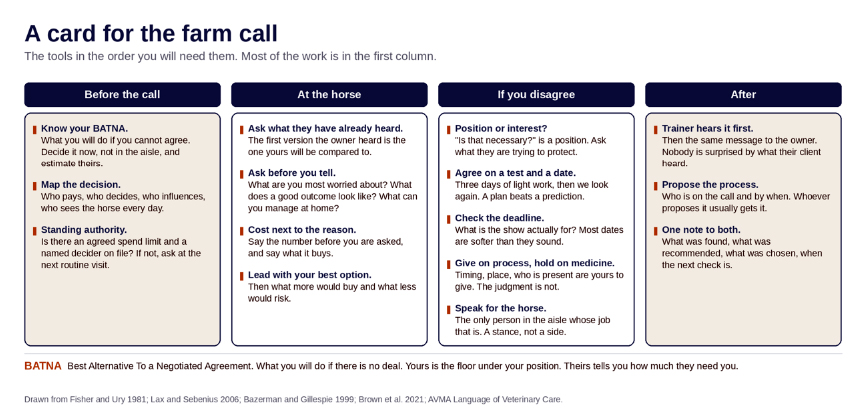
Figure 2. The tools in the order a veterinarian will need them on a farm call.
Talking About Money and Talking About Fear
Two conversations deserve their own tools, because they are the ones where the equine veterinarian most often loses the owner.
The first is about money. Veterinarians tend to assume that cost conversations make clients uncomfortable, but AVMA’s Language of Veterinary Care research, which surveyed pet owners across the United States, found something closer to the opposite. Owners are thinking about money from the moment the appointment starts, they would rather the veterinarian raise it than a member of staff, and they respond well when the veterinarian acknowledges that care is expensive and offers to work within a range. A 2021 viewpoint in JAVMA by Carolyn Brown and her colleagues on what they call spectrum of care adds two things to that. If the most intensive option is presented first, everything after it sounds like a compromise, so it is better to lead with the option you believe is right for this horse and this owner. And a plan that starts conservatively and escalates depending on how the horse responds is an accepted way to practice rather than a second-rate one. The same paper cites earlier work suggesting that fewer than 30% of veterinarians discussed cost during appointments at all.
For an equine veterinarian this comes down to saying the number before you are asked, saying it next to the reason, and saying what it buys. If I had heard, before the films were taken, that they would cost roughly a certain amount and that what they would buy was a farrier working from the inside of the foot rather than guessing from the outside, my trainer’s question would have had an answer waiting for it and I would have been the one to give it. Owners who are sensitive to price are almost never indifferent to the horse. What they need is to understand where the money goes and what can be sequenced, deferred or left out without harm, and an owner with one horse needs that explained once, slowly and in writing, while an owner with a barn full of them needs it as a rule they can apply across the whole herd.
The second conversation is about fear, and it is the one where research helps least and the veterinarian’s own judgment matters most. Some owners decide with a spreadsheet, but more of them decide with their stomach, and answering fear with data is answering a question nobody asked. The communication research recommends reflective listening, which means saying back what you heard and checking that you have it right, and giving people a moment before asking them to choose. Carney and Banaji’s work on first options has a useful corollary here, which is that the pull toward the first thing a person heard fades when they are given time to think. One extra minute, and one sentence that names the decision rather than the diagnosis, changes what an owner is able to do. The diagnosis belongs to the veterinarian, but the decision belongs to the owner, and they can only make it if they can see its shape.
Equine veterinarians carry a great deal of this emotion on behalf of owners, often at the end of a day that started before the owner was awake, and the profession has paid for it. Not One More Vet, founded in 2014, now runs a peer support community of around 40,000 Veterinary professionals. The tools in this article will not fix the hours or the debt, but they may take some of the weight out of the conversations, and that is where a surprising amount of the hard part lives.
A Small World
I wrote in The Plaid Horse this summer that the horse world is small and that people in it should handle conflict with that in mind, and for a veterinarian that cuts both ways. Among the veterinarians in the 2023 survey who said they would clear a slightly lame dressage horse to compete, nearly half named the reputational risk to the rider, and through the rider to themselves, as an important reason. Reputation in a small world is built over years, and what it is built on is consistency: the same reasoning for every client, the trainer told first, and nobody left looking uninformed in front of the person who pays them. The tools above are not a way around that pressure. They are a way of being the same person in every aisle, which is what a reputation eventually comes to rest on.
Back to the Radiographs
Looking back at my own barn, nothing that happened needed to become a problem, and the tools above would have handled it. If my veterinarian had told me, before we took the films, roughly what they would cost and what they would show the farrier that he could not see from outside the hoof, my trainer’s question would have had an answer before it was asked, and I would have been able to give it myself. If the three of us had agreed on what we were looking for and when we would look again, two shoeing cycles and then a second set of films to compare, the question of whether it had been necessary would have become a date on the calendar instead of a doubt in the aisle. And if my trainer had heard directly from my veterinarian what she had found and why it mattered, rather than hearing it from me after the bill arrived, the whole thing would have been one conversation among three people instead of three separate ones.
None of that asks anyone to be more skilled than they already are. It asks that the conversation be set up before it is needed, by the one person in the aisle who has the standing to do it. Veterinarians are trained to read a horse, and the ones who last in equine practice also learn to read the people around the horse, usually one hard conversation at a time. I came into this industry believing they were the best people in it, and fifteen years of barn aisles have only confirmed that. The least the rest of us can do is hand them the tools that every other negotiator in animal health takes for granted, and then get out of the way.
References:
- Kinnison T, Cardwell JM. Conflict between direct experience and research-based evidence is a key challenge to evidence-based respiratory medicine on British racing yards. Front Vet Sci. 2020;7:266. doi:10.3389/fvets.2020.00266
- Springer S, Mihatsch DI, Grimm H, Jenner F. Between leisure and pressure: veterinarians’ attitudes towards the care of competition horses in Germany, Austria and Switzerland. Animals. 2023;13(13):2126. doi:10.3390/ani13132126
- Lederhouse C. AAEP develops resources to recruit, retain equine veterinarians. AVMA News. March 27, 2024. Reporting the AAEP 2022 Equine Medicine Salary & Lifestyle Survey. https://www.avma.org/news/aaep-develops-resources-recruit-retain-equine-veterinarians
- American Horse Publications. 2025 AHP Equine Industry Survey, sponsored by Zoetis; data analysis by Stowe CJ, University of Kentucky. 3,881 eligible responses, collected January to March 2025. https://www.americanhorsepubs.org/2025-ahp-equine-industry-survey-sponsored-by-zoetis/
- Mitchell RD. Welfare concerns for the US sport horse: a matter of practice ethics? [editorial]. Equine Vet Educ. 2019;31(5):228-229. doi:10.1111/eve.12957
- Lax DA, Sebenius JK. 3-D Negotiation: Powerful Tools to Change the Game in Your Most Important Deals. Boston, MA: Harvard Business School Press; 2006.
- Fisher R, Ury W. Getting to Yes: Negotiating Agreement Without Giving In. Boston, MA: Houghton Mifflin; 1981.
- Carney DR, Banaji MR. First is best. PLoS One. 2012;7(6):e35088. doi:10.1371/journal.pone.0035088
- Bazerman MH, Gillespie JJ. Betting on the future: the virtues of contingent contracts. Harv Bus Rev. 1999;77(5):155-160.
- Brown CR, Garrett LD, Gilles WK, et al. Spectrum of care: more than treatment options. J Am Vet Med Assoc. 2021;259(7):712-717. doi:10.2460/javma.259.7.712
- American Veterinary Medical Association. Communicating with clients: using the right language to improve care. Language of Veterinary Care Initiative. https://www.avma.org/resources-tools/practice-management/communicating-clients-using-right-language-improve-care
- Not One More Vet. About NOMV. https://www.nomv.org/
- Vespi D. The horse world is small. Fight accordingly. The Plaid Horse. August 2026 (print).