
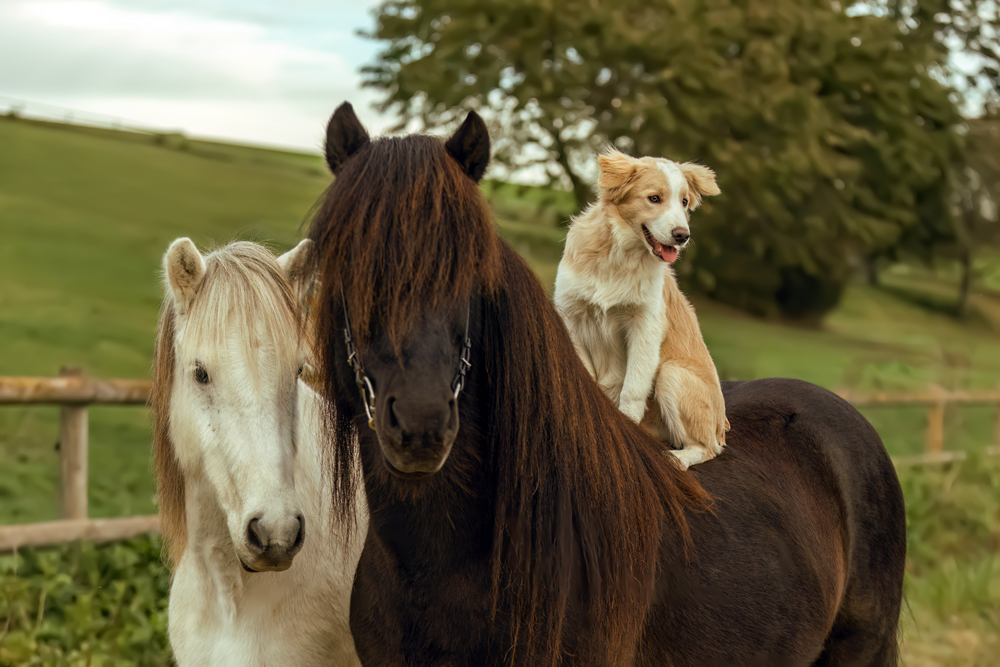
Owners tend not to draw lines between the dogs, cats, or horses they love. The commercial worlds built around each of those species tend to draw them constantly.
In many animal health organizations, companion animal and equine sit under the same commercial umbrella. Sometimes that means one P&L, one marketing budget, or one field representative covering both species. The rationale is sound on paper: shared infrastructure reduces overhead, operational leverage improves margins, and the segments do share some biology, some products, and some regulatory bodies. In others, the two are managed separately but still benchmarked against each other when leadership makes resource allocation decisions. Both structures are common, and both carry the same underlying risk. When a companion animal selling model gets applied to equine accounts, or when equine field investment gets reduced because the companion animal business is under pressure, or when a leader who has spent a career in one segment makes assumptions about the other without the right people in the room, both businesses pay the price. Companion animal and equine can coexist within one organization, when managed with strategic intention and the right expertise supporting each segment. The question is whether that intention is present, or whether the structure is simply a matter of operational convenience.
What follows is an honest look at where the two segments diverge, what that divergence demands commercially, and why getting it wrong costs more than most organizations anticipate.
Where Each Market Stands
Annual dog ownership in the United States costs approximately $2,524 and cat ownership approximately $1,499, according to the APPA 2023-2024 National Pet Owners Survey. For companion animal owners, pets are family. The spending reflects that emotional reality: owners will try to find a way to cover veterinary care for an animal woven into their daily life, even when budgets are under pressure. Horses are equally loved, and many owners describe the bond in the same terms. The difference is the scale of financial commitment. The cost of boarding, farrier care, feed, routine veterinary visits, and emergency treatment for a horse demands a level of disposable income that companion animal ownership does not. Studies of equine owner demographics consistently find that approximately 50% of horse owners have household incomes above $100,000 and that most fall within the top 20% of national income brackets, according to equine practice research published in EquiManagement. Equine practice is directly dependent on its customers having that income available and feeling comfortable spending it. When economic pressure shifts that comfort, the commercial impact is immediate.
The companion animal market has experienced four consecutive years of declining veterinary visit volume. Visits per practice fell 3.5% in 2022, 1.4% in 2023, 2.6% in 2024, and 3.1% in 2025, with wellness visits falling 3.8% and product-only visits down 6.2% last year alone, according to Vetsource’s January 2026 white paper drawn from nearly 6,500 U.S. veterinary practices. Practices raised prices by an average of 6.57% yet revenue grew only 5.4%, a gap created entirely by fewer patients coming through the door. The Brakke Consulting annual companion animal market assessment, presented at VMX in January 2026 and reported by AVMA, confirmed the sentiment: 81% of veterinarians described clients as more cost-sensitive than the prior year, up from 72% in 2024, and profitability improved at only 32% of practices, the lowest figure in several years.
The equine market is under a different kind of pressure. The 2025 AHP Equine Industry Survey drew 3,881 respondents across all 50 states. Cost of horsekeeping ranked as the top industry concern for the first time in the survey’s history, cited by 50.3% of respondents. Veterinary services were identified as a significant cost increase by 54.6%, and access to equine veterinary care ranked third among top concerns at 35.5%. Some respondents indicated rising costs could affect the number of horses they continue to own. At the same time, the survey found continued stability in the number of horses owned and managed, a testament to the commitment of the equine owner base even when the economics are difficult. As care, nutrition, and management improve, many owners are also managing horses across longer life stages, extending both the emotional relationship and the duration of care-related spending.
Both markets are navigating real economic headwinds, and in both, owners are more careful about where they spend. What that pressure looks like, and what it demands commercially, is not the same.
Two Kinds of Commercial Complexity
The companion animal commercial environment has become genuinely complex in ways that are easy to underestimate. Estimates from Brakke Consulting suggest corporate consolidators own roughly 30% of U.S. general veterinary practices, a figure that rises substantially when private equity-backed investment across general and specialty practices is included. These corporate groups operate through GPO contracts and centralized purchasing agreements. E-commerce compounds the shift, with Packaged Facts estimating online pet product sales at more than one-third of U.S. pet product spending. In practice, a sales representative calling on a corporate group today may be scheduling time with a practice manager who answers to a regional operations director, with product decisions governed by a corporate medical director and purchasing agreements negotiated at the group level. The clinical preference of an individual veterinarian matters, though it is one input among several. Navigating this channel requires expertise in corporate procurement, multi-stakeholder account management, and protecting brand positioning as purchasing migrates online.
Equine presents a different kind of complexity, one that grows more acute as the practitioner base contracts. The 35.5% of AHP 2025 respondents who cited access to equine veterinary care as a top concern are pointing to a structural issue. According to the AVMA, approximately 75% of current veterinary graduates enter companion animal practice, and that percentage increases each year. The 2024 AVMA/AAEP Report on the Economic State of the Equine Veterinary Profession documents a decline in the percentage of graduates entering equine practice over the past decade, and the American Association of Equine Practitioners estimates that 50% of early-career equine veterinarians leave for other opportunities, primarily companion animal positions, within five years of graduation. In August 2025, USDA issued a Rural Veterinary Action Plan focused on rural and food animal veterinary shortages, citing 243 declared shortage areas across 46 states, the highest on record, reflecting the broader access pressures facing large-animal veterinary care. The commercial implication: the equine veterinarians who remain are not being replaced at the same rate, and the representative who has cultivated relationships with those practitioners holds a position no competitor can easily buy with a better price.
Jenna Mutch, an animal health commercial executive with more than 20 years of experience across both companion animal and equine, describes how spending behavior diverges under pressure: “Horse owners will change where they buy the products they consider non-negotiable to find the best deal, while pet parents will put more time between doses, which means fewer doses per pet, or they will change brands or forego altogether.” For equine companies, vet-direct purchasing programs become more important during a downturn. For companion animal companies, the priority is protecting dose frequency and brand loyalty at a time when owners are actively looking for places to cut. As Mutch adds: “When the market landscape looks like it does now, companies see a lot of success in programs that encourage horse owners to buy from the vet, and for small animal programs that encourage doses and brand loyalty.”
How Veterinary Care Is Delivered Changes Everything
The companion animal veterinarian works in a clinic. The patient comes to them. A representative calling on that practice can schedule time with a practice manager, present clinical data, and leave materials. In corporate practice groups, what that representative wears, how the meeting is formatted, and what the success metrics are will reflect a culture that has moved closer to human pharmaceutical and healthcare norms than to agriculture. The companion animal selling environment rewards data fluency, multi-stakeholder account management, and the ability to build a value case that resonates across an organizational chart.
The equine veterinarian goes to the horse. The 2024 AVMA/AAEP Report on the Economic State of the Equine Veterinary Profession found that ambulatory practice remains the dominant model for equine-exclusive veterinarians, with approximately 6 appointment slots per full-time veterinarian per day compared to 13 to 14 in companion animal practices. Their office is a truck. Their waiting room is a barn aisle. Conversations happen between farm calls, often standing next to a horse in conditions that have nothing to do with a conference room. A productive equine call can look entirely different from a productive companion animal call, and a representative moving from one model to the other, in either direction, may not immediately recognize where the assumptions break down.
Both segments have deep veterinarian-client relationships, but the nature of those relationships differs in ways that matter commercially. The equine veterinarian often gives clients their cell phone number. There is no office staff buffer, no appointment scheduler filtering calls, no lobby creating separation between the practitioner and the person paying the bill. A trainer who has known their veterinarian since they first started riding, or a barn manager whose vet has called on the same property for fifteen years, has a different kind of access and a different kind of trust than most other professional relationships. Companion animal veterinarians also build lasting relationships. The independent practice veterinarian who has seen multiple generations of a family’s pets carries genuine community standing and loyalty. The difference is that corporate consolidation and e-commerce have created alternative routes to product adoption in companion animal that partially work around individual practitioner relationships. In equine, those bypasses do not exist at the same scale. The veterinarian relationship remains the primary commercial channel.
How Buying Decisions Are Made in Each Segment
| Commercial Dimension | Companion Animal | Equine |
| Who holds the decision | Corporate accounts: procurement executive or medical director. Independent: practice owner or lead veterinarian. Pet owner preference also influences, particularly in independent practice. | Equine veterinarian combined with owner, trainer, or barn manager. Even in corporately owned equine practices, decisions often remain at the veterinary and owner level. |
| What earns access | Portfolio value, outcomes data, margin support, GPO contract terms, preferred product positioning, and clinic-level adoption support. | Field presence, clinical credibility, relationship depth across multiple non-sales touchpoints, and trust within the regional network. |
| Relationship timeline | Corporate: quarterly business review cycles with formal contract structures. Independent: ongoing personal relationship built over time. | Longer than most segments. Relationships often precede any commercial conversation, and trust functions more like a handshake than a contract. |
| What cost pressure does | Shifts leverage toward procurement teams; increases pressure on preferred product positioning, dose adherence, brand loyalty, and shelf space. | Concentrates owner spending around trusted recommendations; some equine veterinarians may also reduce what they carry on the truck and shift certain products toward e-commerce or direct purchasing. |
| Biggest commercial risk | Losing preferred positioning to a competitor with better contract terms, broader portfolio, or stronger e-commerce strategy. | Reputational damage in a small, tight network, and the reality that established field reps with decades of relationships are difficult to displace regardless of product. |
| Priority right now | Map corporate versus independent split; invest where decisions are actually being made; protect dose frequency and clinic loyalty. | Protect field presence. The equine veterinarian relationship is the access point to everything that follows. |
In companion animal, winning in corporate accounts requires building a case for three stakeholders at once: the veterinarian who drives clinical adoption, the practice manager who monitors costs, and the corporate buyer or GPO manager who controls preferred product positioning. Missing any one creates vulnerability. Vetsource analytics show independent practices are outperforming corporate counterparts in the current downturn, with smaller visit declines and better revenue growth. Commercial strategy that has migrated almost entirely toward corporate account management may be underinvesting in the segment proving more resilient.
In equine, the buying relationship is high-stakes, with long institutional memory, and for sales reps, field presence is the foundation of everything that follows commercially. Trust is the primary variable in a market where the customer base is small and reputational information travels quickly. Horse owners tightening budgets protect spending on the professionals and products they know best, cutting the periphery first: brands without a clear relationship, companies with inconsistent field contact. This is also why incentive structures matter so much. As Mutch puts it: “Commission and incentive plans and sales performance metrics are critical in guiding the desired sales professional behaviors. Your plan cannot be one size fits all across your business lines.” A representative covering both segments under a single incentive structure will naturally prioritize the faster-moving one, which can pull focus, field time, and resources away from the relationship work that equine requires and toward the segment that produces quicker returns.
What Managing Both Actually Requires
Equine and companion animal can compete for resources within the same organization, and when they do, the outcome is rarely neutral. A leader whose career was built in companion animal may not fully appreciate what equine requires. A leader whose experience is primarily equine may underestimate the sophistication that companion animal corporate account management demands. In both cases, the segment that is less familiar tends to be the one that gets shorted when budgets tighten. The equine world often runs on trust, on relationships sealed by consistent presence and a handshake, where the representative who has shown up reliably for a decade holds ground that no contract can manufacture. Corporate companion animal accounts, by contrast, require formal agreements, outcome metrics, and procurement-level engagement that demands a very different commercial fluency. Neither is simpler. They are differently demanding. As Ronald Reagan said: “Surround yourself with the best people you can find.” In animal health, that means deliberately placing people with genuine expertise, relationships, and credibility in each segment and giving them a real seat at the table when commercial decisions are made.
The signal that a structure needs rethinking is usually visible before it becomes a crisis. It shows up when equine accounts go quiet with no clear commercial explanation. When a companion animal account stalls because no one on the team understands how corporate veterinary medicine makes decisions. When the people who understood a segment’s nuances leave because they no longer feel heard. These are organizational signals, not market signals, and they surface before the revenue does.
Dogs, cats, and horses can all be part of the family, and many animal owners do not draw emotional lines between the species they love. That overlap creates genuine opportunity for organizations that understand both segments well enough to serve each on its own terms. The mistake is treating emotional similarity as commercial similarity. Companion animal and equine may share customers, companies, and sometimes products, but they do not share the same buying dynamics, access points, or commercial requirements. Both markets are worth building for. Neither rewards the assumption that one approach fits all.
REFERENCES:
- Vetsource. Turning Trends into Opportunities: Insights to Meet Client Expectations and Build Loyalty in 2026 [white paper]. January 15, 2026. https://vetsource.com/blog/vetsource-outlines-path-to-stronger-client-relationships-and-practice-success/
- Brakke Consulting. Annual U.S. Companion Animal Veterinary Market Assessment [presentation]. North American Veterinary Community VMX; Orlando, FL; January 2026. Reported by AVMA, February 13, 2026. https://www.avma.org/news/veterinarians-report-increasing-price-sensitivity-decreasing-visits
- American Horse Publications. 2025 AHP Equine Industry Survey. Sponsored by Zoetis; analysis by Stowe CJ, University of Kentucky. July 2025. https://www.americanhorsepubs.org/2025-ahp-equine-industry-survey-sponsored-by-zoetis/
- American Pet Products Association (APPA). 2023-2024 National Pet Owners Survey. 2024. https://americanpetproducts.org/research-insights
- Grice A. The reality of equine practice in 2023. EquiManagement. April 2023. https://equimanagement.com/business-development/the-reality-of-equine-practice-in-2023/
- American Veterinary Medical Association (AVMA). Solving today’s workforce challenges to ensure a bright future. https://www.avma.org/blog/solving-todays-workforce-challenges-ensure-bright-future
- American Association of Equine Practitioners (AAEP); American Veterinary Medical Association. AAEP develops resources to recruit, retain equine veterinarians. March 2024. https://www.avma.org/news/aaep-develops-resources-recruit-retain-equine-veterinarians
- American Veterinary Medical Association; American Association of Equine Practitioners. 2024 Report on the Economic State of the Equine Veterinary Profession. 2024. https://ebusiness.avma.org/files/ProductDownloads/eco-state-of-prof-equine-report-toc-exec-summary-2024.pdf
- American Veterinary Medical Association. 2025 Economic State of the Veterinary Profession. 2025. https://ebusiness.avma.org/files/productdownloads/002_AVMA_SotPReport25_NoPasswordPRO.pdf
- Brakke Consulting. Corporate consolidation estimates for companion animal veterinary practices. Cited by Care for Pets. April 2025. https://www.pets.care/corporate-consolidator-ownership-of-veterinary-practices/
- U.S. Department of Agriculture (USDA). USDA expands efforts to strengthen rural food animal veterinary workforce and protect America’s food supply [press release]. August 28, 2025. https://www.usda.gov/about-usda/news/press-releases/2025/08/28/usda-expands-efforts-strengthen-rural-food-animal-veterinary-workforce-and-protect-americas-food
- Packaged Facts. U.S. e-commerce pet product sales data. As reported by Pet Age. August 31, 2023. https://www.petage.com/packaged-facts-e-commerce-pet-product-sales-surpassed-30b-in-2022/