
Job interviews are delicate conversations.
They are not only opportunities for employers to evaluate candidates, but they are also moments when candidates are presenting their professionalism, judgment, and interpersonal awareness. Every word, story, and example shared during an interview contributes to the overall impression a hiring manager forms.
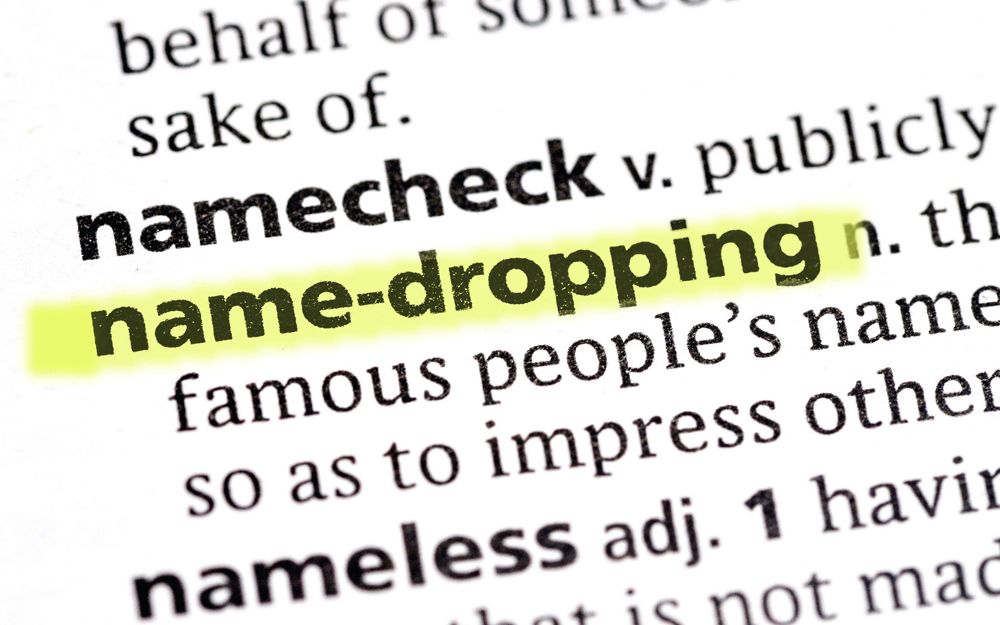
One behavior that can unexpectedly undermine an otherwise strong interview is name-dropping.
Name dropping—mentioning influential people or contacts in order to elevate one’s perceived credibility—is often intended to strengthen a candidate’s position. However, if done poorly or without context, it can have the opposite effect. In many cases, it creates doubt rather than confidence.
Recently, I experienced a situation that perfectly illustrates this risk. A candidate I was working with mentioned a well-known individual during an interview. The intent seemed clear: the candidate likely believed that referencing this person would strengthen their credibility. Unfortunately, the hiring manager did not appear to share the same positive impression of the individual being referenced.
The result? What was intended to impress may have created uncertainty. Situations like this highlight why professionals should approach name dropping in interviews with extreme caution.
The Thin Line Between Confidence and Arrogance
Many candidates name-drop because they believe it demonstrates connections, influence, or insider credibility. But hiring managers often interpret it very differently. Recruiters frequently note that name-dropping can come across as egoistic, pretentious, or insecure when it is used without tact.
For example, a candidate might say something like:
- “I know the VP of strategic sourcing.”
- “I play golf with one of your executives.”
Statements like these may sound impressive in the candidate’s mind, but to an interviewer they can feel like an attempt to gain advantage through connections rather than merit.
Interviews are meant to evaluate the candidate’s skills, judgment, and character. When candidates rely too heavily on who they know rather than what they have accomplished, they risk weakening their credibility.
Name-Dropping Can Backfire in Unexpected Ways
One of the biggest dangers of name-dropping is something many candidates never consider: you cannot control how the interviewer feels about the person you mention. Candidates often assume that referencing a well-known individual will create a positive association. But there are several reasons this assumption may not hold true. The interviewer might have:
- A negative professional experience with that person
- A different opinion of that person’s abilities
- No familiarity with the individual at all
- A personal relationship that complicates the situation
In other words, you never truly know what reaction your reference might trigger. In my recent example, the candidate probably believed they were strengthening their credibility. Instead, the hiring manager’s reaction suggested that the name may not have carried the positive weight the candidate expected.
That is the unpredictable nature of name-dropping.
It Can Sound Like You’re Expecting Special Treatment
Another major issue with name-dropping is the perception that the candidate is trying to skip the normal process.
Many hiring managers strongly believe in fairness during the hiring process. They want to select candidates based on qualifications, experience, and cultural fit, not based on personal connections.
When a candidate casually mentions knowing someone influential, the interviewer may interpret it as an attempt to gain special consideration.
Experts in recruiting note that one of the biggest objections to name-dropping is that it can create the impression the candidate expects “an easy ride” or preferential treatment. Even if the candidate had no such intention, the perception alone could create discomfort. In interviews, perception matters just as much as intention.
It Can Undermine Your Own Achievements
Ironically, name-dropping can also unintentionally minimize your own accomplishments. Consider two different responses to an interview question:
Response A:
“I worked closely with Dr. Smith, who is well known in our industry.”
Response B:
“I led a project that improved patient outcomes by 18% through a new treatment protocol.”
The second answer focuses on measurable results and personal contribution. The first focuses on association.
Hiring managers are far more interested in what you do than who you know. When candidates emphasize connections rather than accomplishments, they may unintentionally weaken their own narrative.
Name-Dropping Can Create Verification Risk
Another overlooked danger is that any name you mention becomes a potential reference check.
If you claim to know or work with someone, the interviewer may ask follow-up questions or verify the connection.
If the relationship is exaggerated or misunderstood, the credibility damage can be immediate. Even worse, if the person you referenced is contacted and does not remember you or cannot confirm the relationship, it can create serious doubts about your honesty.
Name-dropping without a strong and authentic connection is particularly risky for this reason.
When Name-Dropping Might Be Appropriate
This doesn’t mean that mentioning professional connections is always wrong. In some situations, referencing a contact can be appropriate, but only when done carefully and with context. For example:
- If someone within the organization encouraged you to apply
- If you worked directly with a respected professional in your field
- If you collaborated with someone relevant to the role
Even then, the emphasis should not be on the name itself. Instead, the focus should be on the experience or insight gained through the interaction.
For example: “I spoke with Dr. Johnson about the organization’s mentorship culture and that conversation reinforced my interest in the role.”
This type of statement provides context without sounding like a boast.
The Real Goal of an Interview
At its core, a job interview is not about demonstrating your network. It is about demonstrating:
- Your capabilities
- Your experience
- Your problem-solving skills
- Your professional judgment
- Your ability to contribute to the organization
Hiring managers are trying to answer one key question: Can this person succeed in the role and strengthen our team?
Your answers should help them reach that conclusion through evidence, not through implied associations.
Focus on What Truly Matters
Instead of relying on name-dropping, candidates should focus on elements that truly strengthen their candidacy.
- Clear accomplishments: Share measurable results from your past roles.
- Professional judgment: Demonstrate thoughtful decision-making and problem-solving.
- Cultural fit: Show how your values align with the organization.
- Communication skills: Present your experiences clearly and confidently.
- Authenticity: Be genuine in how you describe your work and experiences.
These qualities create lasting impressions and build trust with interviewers.
A Simple Rule of Thumb
If you are ever unsure whether to mention a name during an interview, ask yourself three questions:
- Is the connection relevant to the role?
- Does the person know I am mentioning them?
- Does this strengthen my story or distract from it?
If the answer to any of these questions is unclear, it may be best to leave the name out entirely. In many cases, letting your own experience speak for itself is far more effective.
Professional Credibility Comes From Your Work
In the end, the strongest candidates rarely rely on name-dropping. Their credibility comes from their track record, their knowledge, and their ability to communicate their value clearly. Connections can be helpful in opening doors, but once you are in the interview, your own abilities must carry the conversation.
The professionals who leave the best impression are those who speak confidently about their work, demonstrate thoughtful insight, and approach the interview with humility and professionalism.
Name-dropping may seem like a shortcut to credibility. But more often than not, it creates risk rather than advantage. And when it comes to interviews, the safest and most effective strategy is simple: Let your accomplishments speak louder than your connections.