
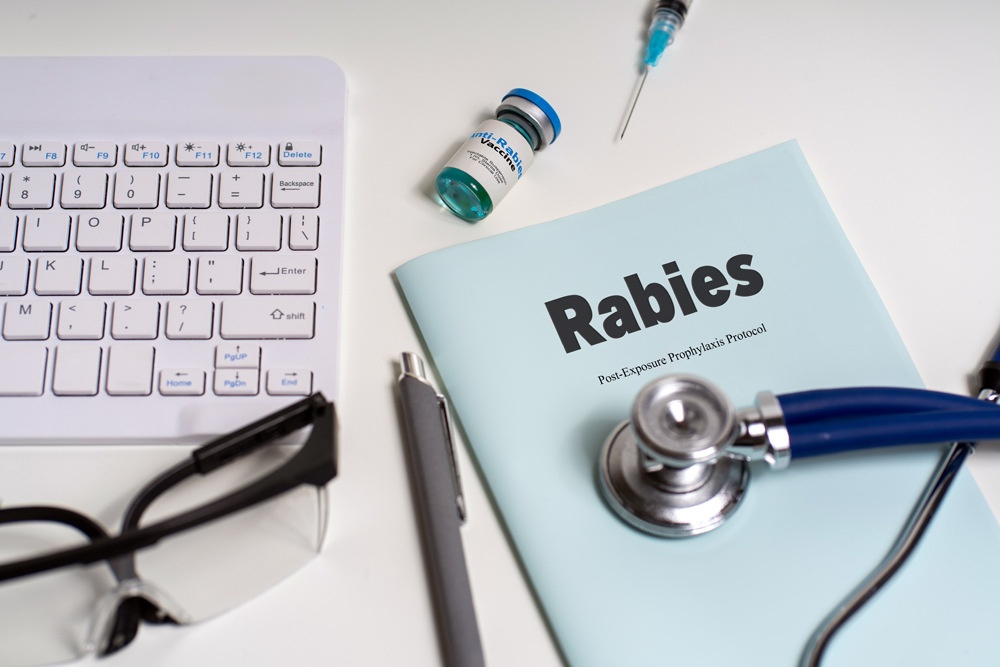
For many pet owners, a rabies alert is the kind of news that immediately gets their attention. A confirmed case in a nearby county can suddenly turn an ordinary evening into a series of questions, such as: Is my pet protected? Could my dog have been exposed? What about the cat that slipped outside? Should I be worried about my children? Are we more at risk, with all of the wildlife we’ve been seeing in our neighborhood?
For Veterinary teams, these questions are nothing new. The difference comes with the urgency at which the questions are being asked.
When a zoonotic disease makes the news, as was recently the case in my local area, the Veterinary hospital can quickly become one of the first places concerned pet owners turn for answers. Oftentimes, news outlets hurriedly push out reports with minimal factual information, focusing on the drama. This can increase the anxiety and panic among pet owners and the general public.
While vaccination is an important part of rabies prevention, the role of the Veterinary team, and especially that of Veterinary technicians, extends well beyond the injections when a community is facing a local outbreak.
Veterinary technicians are community educators and communicators. We are often the people who translate complicated information into language a pet owner can understand. And, perhaps most importantly, we may be the calm voice on the other end of the phone when a frightened pet owner doesn’t know what to do next.
When the Headline Hits Close to Home
Rabies is one of those diseases that tends to generate an enormous immediate emotional response—and for good reason. It is a serious zoonotic disease, and once clinical signs develop, rabies is almost always fatal in mammals. At the same time, a confirmed case of rabies in a nearby community does not automatically mean that every pet or person in the area has been exposed.
That distinction is very important. When people are frightened, it can be difficult to separate risk from possibility. For example, a social media post announcing a rabid raccoon or other animal may quickly become, “There is rabies in our area, so my pet must be at risk.”
This is where Veterinary professionals can make an enormous difference. The first response doesn’t have to be an entire lecture about rabies. Sometimes it is simply, “Let’s slow down and figure out what happened.”
Was there an actual bite? Was there a scratch? Could saliva have contacted an open wound or mucous membrane? Was the animal confirmed positive or was it simply behaving abnormally? Was the involved pet vaccinated? When was the most recent vaccination given? Were there any humans involved? What guidance has been provided by local public health officials?
Asking direct questions can help turn fear into information.
The guidelines of many states define rabies exposure based on specific contact with potentially infectious saliva, including bites or contamination of scratches, open wounds, or mucous membranes; not simply being in the same general geographic area as a rabid animal.
That doesn’t mean we should minimize concerns. It means we should take them seriously enough to evaluate them accurately. Being aware of your local and state guidelines and being able to communicate them effectively to the public is essential.
The Veterinary Technician as a Public Health Educator
Veterinary technicians may not always think of themselves as public health professionals, but we should.
Each time we administer a vaccine or review a patient’s vaccination history, discuss parasites, ask how much time the pet spends outdoors and in what areas, talk about wildlife exposure, educate a client about bite prevention, or recognize a potentially risky situation for pets or their people, we are participating in public health. All of these duties, and more, occur daily, often without the need for referral to public health authorities.
These conversations create unique opportunities. We can use our position to explain why vaccination, parasite prevention, and preventative health care matter. We can reiterate that keeping pets healthy can also help reduce the spread of zoonotic diseases to their human family members. We can reinforce the importance of keeping accurate records and encourage owners to contact the appropriate authorities when a potential exposure has occurred.
To put it simply: a vaccine is given primarily to protect the individual patient, but that protection can have a wider reach. And the education surrounding that vaccine helps protect the local community.
Calm is Contagious, Too
Part of the Veterinary technician’s role, which is often overlooked, is to assist in emotional regulation of clients.
When clients are scared, they may not be able to absorb a long list of instructions. A panicked pet owner doesn’t necessarily need more information. They need the right information, presented clearly, concisely, and calmly.
This is particularly important when news outlets and social media begin amplifying a local disease event.
A single confirmed case can generate hundreds of posts, comments, screenshots, rumors, and secondhand accounts. Some may contain useful information. Many others may be incomplete, outdated, or simply incorrect. Veterinary teams can help clients identify reliable sources and understand when a situation requires professional evaluation.
Our approach and language also matter. Instead of saying, “Don’t worry,” we can say: “I understand why you’re concerned. Let’s talk through exactly what happened.”
Focus on the facts instead of immediately trying to answer every hypothetical question. Direct concerned clients to resources containing credible information such as your hospital’s website, local health departments, animal control, or other appropriate public health resources.
Calming a client does not mean minimizing the risk. It means helping them respond to the risk appropriately.
Knowing When the Veterinary Hospital is Not the Final Stop
One important skill for Veterinary technicians to develop is recognizing when a question or situation has moved beyond routine client education. A potential rabies exposure involving a person is an excellent example.
Veterinary professionals can gather important information, provide appropriate guidance within their scope, and help clients understand what information they may need to provide. But human exposures may require involvement from public health or a [human] medical professional.
Knowing where to direct a client is part of being an effective communicator.
The same is true when an animal has potentially been exposed to rabies. Discussions and decisions involving testing, confinement, quarantine, observation, or other public health measures may involve state or local authorities and should be handled according to applicable local regulations and guidance.
Knowing our limitations and sharing them openly with clients doesn’t make us less valuable. It makes us safer, more confident professionals.
Public Health Happens Before the Outbreak
One of the easiest things to forget during a disease event is that prevention didn’t (and shouldn’t) begin when the headline appeared.
It began months or years earlier, when that newly adopted pet received its first rabies vaccination. Or when the Veterinary technician explained why a pet’s vaccinations should be kept up to date, and when families were taught not to approach wildlife that appeared sick, injured, or unusually healthy.
It began when the Veterinary team established a relationship with the pet and the family, by asking the right questions and providing credible information during routine appointments. It continues every time we reinforce those messages.
Successful public health often looks remarkably ordinary. It is built quietly every day, through prevention, education, and the countless small conversations we have with the people who trust us to care for their pets. None of these moments feel particularly dramatic. Yet collectively, they form an important layer of protection for our patients, our clients, and our communities.
We Don’t Have to Be Epidemiologists to Make a Difference
Veterinary technicians don’t need to memorize every rabies regulation or become experts in epidemiology to contribute meaningfully to public health. What we do need to understand are the fundamentals, recognize potential exposures, practice within our scope, and know where to find the most up-to-date local and state requirements when we need to review them.
We need to be aware of which situations need to be escalated and referred to public health or human healthcare professionals. And of course, we need to be comfortable communicating with people who are frightened.
That last piece may be more important than we realize.
Pet owners don’t always remember everything we say during a routine appointment. But they may remember the technician who answered the phone after they found a bat in the house or the person who calmly explained what questions needed to be answered after their dog was bitten by a wild animal. They may remember being told, “You’re right to call with your concerns. Let’s figure this out together.”
Those interactions build trust, and trust is one of the most valuable tools we have when public health concerns enter the Veterinary hospital.
The Bigger Picture
Rabies is only one of many examples of the intersection between animal health and human health. Veterinary teams routinely work at that intersection.
We discuss zoonotic diseases, educate about parasites, and promote vaccination. We talk about food safety, wildlife encounters, bite prevention, hygiene, and responsible animal care. We recognize disease patterns and communicate concerns to colleagues and veterinarians and then coordinate with public health authorities as needed.
Much of this work happens quietly, but that does not mean it is not important.
When an infectious disease makes the news, the public doesn’t necessarily need another voice adding to the chaos. They need knowledgeable professionals helping them understand the situation. They need someone who can distinguish concern from panic, risk from exposure, and speculation from information.
Veterinary technicians are uniquely positioned to be that voice.
Public health doesn’t begin when the headline appears. It begins with the everyday conversations we have with our clients and the pet-owning public before the headline ever appears. It continues through our skilled responses during times of stress and chaos. And it is evident in the way we educate pet owners and help them navigate the unknown when a disease outbreak occurs.